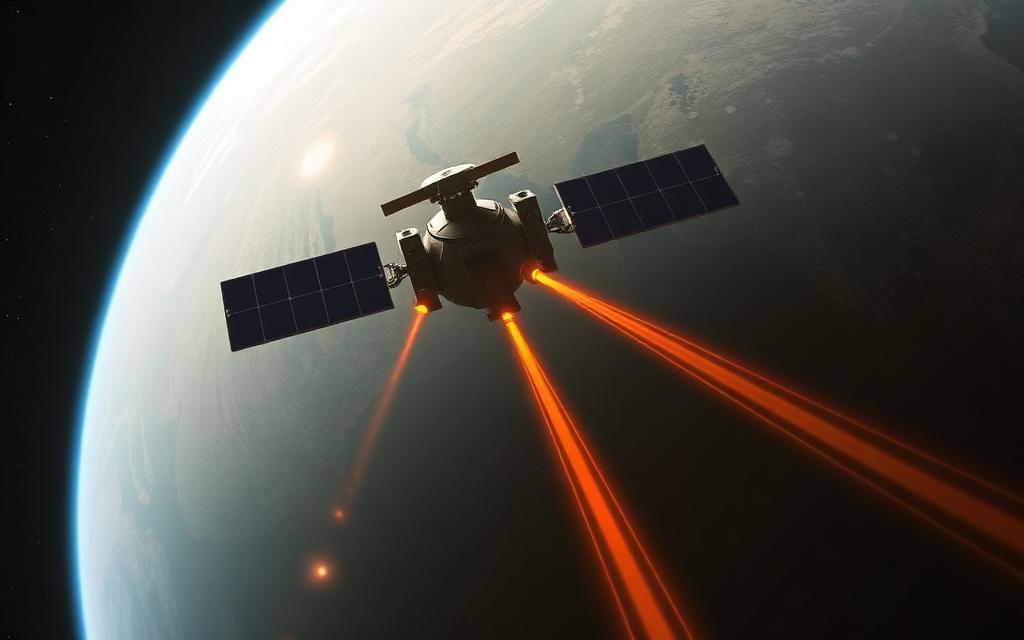
In 1983, when Korean Air Flight 007 strayed into Soviet airspace and was shot down, President Reagan promised that GPS — then a classified U.S. military system — would be made available worldwide for civilian use. That decision quietly enabled trillions of dollars of economic activity over the next four decades.
From Bombs to Backpacks
GPS started as a navigation aid for nuclear submarines and precision-guided munitions. Selective Availability — deliberate degradation of the civilian signal — was switched off in 2000. Within five years, in-car navigation, geocaching and farm-equipment auto-steer became mainstream.
The Smartphone Revolution
The 2007 iPhone was the first mass-market device to combine GPS, internet and a touchscreen map. Uber, Lyft, Strava, Pokémon GO, food delivery, dating apps — none would exist as we know them without GPS. Learn how GPS actually works.
Beyond Navigation
- Time — GPS atomic clocks synchronize stock exchanges, power grids and cellular networks.
- Surveying — RTK GPS achieves centimeter accuracy for construction and mapping.
- Emergency response — E911 location, search-and-rescue, disaster mapping.
- Agriculture — auto-steer tractors save fuel and increase yields.
The Risk of Dependence
GPS jamming and spoofing are real and rising. That's why Europe (Galileo), China (BeiDou), Russia (GLONASS), India (NavIC) and Japan (QZSS) all built independent constellations.
Track GPS satellites overhead on the live tracker.