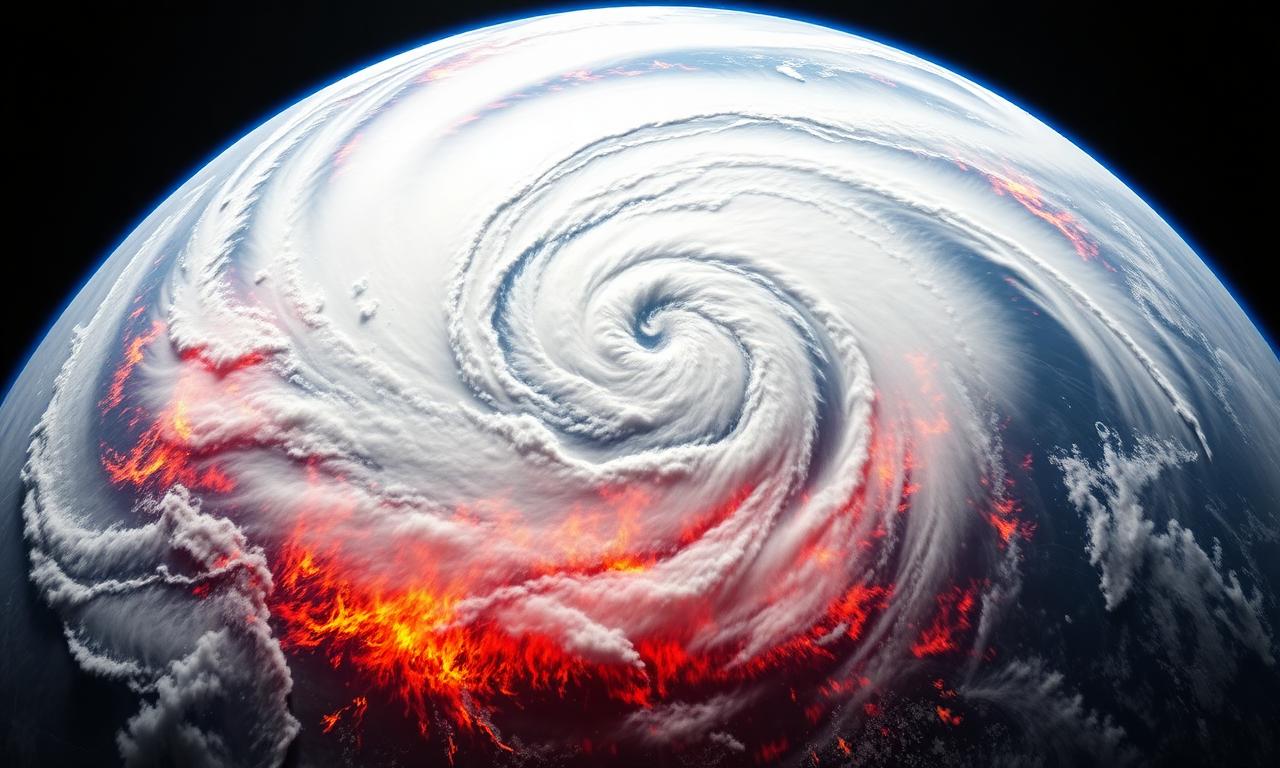
Earth observation (EO) is the use of satellites to image and measure our planet. EO data powers weather forecasts, wildfire response, agriculture, urban planning, climate science, intelligence, insurance, and more. Modern operators downlink terabytes of imagery every single day.
Optical Imaging
The simplest EO instrument is a camera. Visible-light "true color" imagery is what we see in Google Earth. But satellites also see beyond visible: multispectralimagers capture 4–13 specific wavelengths (red edge, near-infrared, shortwave-infrared) used to assess vegetation health, water quality, and burn scars. Hyperspectralsensors capture hundreds of contiguous bands for fine chemical fingerprinting.
Synthetic Aperture Radar (SAR)
SAR satellites bounce microwave pulses off the ground and listen for the echo. Because radar provides its own illumination, SAR works at night and through clouds — a huge advantage in storm response and tropical regions. Sentinel-1 and Capella Space provide widely used SAR imagery.
Resolution
EO satellites are categorized by resolution:
- Coarse (250 m–1 km) — climate, ocean color, broad weather.
- Medium (10–30 m) — Landsat, Sentinel-2: agriculture and land use.
- High (0.3–5 m) — Maxar, Planet SkySat: defense, mapping, monitoring.
- Very high (<0.3 m) — newest commercial sensors approaching aerial-photo quality.
Revisit Time
Just as important as resolution is revisit — how often a satellite (or constellation) re-images the same spot. Sentinel-2 revisits every 5 days; Planet's constellation images the entire landmass daily. SAR constellations are pushing toward hourly revisit for monitoring and intelligence applications.
From Pixels to Insight
Raw imagery isn't useful by itself. Cloud detection, atmospheric correction, geometric registration and machine-learning analytics turn pixels into ship counts, crop yield forecasts, deforestation alerts and methane plume detections.
Continue with our Earth Observation Center for live imagery galleries, or learn how weather satellitesapply many of the same techniques.